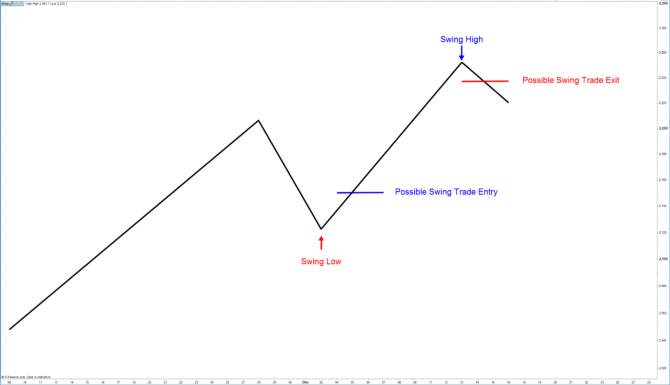
Swing exchanging is a style of exchanging that holds an open position(s) at any rate overnight and up to a few days or even a little while. It can join both the specialized examination part of day exchanging and the principal explore part of contributing. Swing exchanging still includes dynamic position administration however uses longer time interims to decide value targets and stop-misfortune levels. Many favor swing exchanging as the more extensive time spans tend smooth out here and now “commotion” bringing about a more settled experience contrasted with the excited pace of day exchanging.
Swing Trading Vs. Day Trading
Day Trading
As the name expresses, it’s “day” exchanging which restricts the exchanging movement to a solitary every day exchanging session. The United States values showcases authoritatively open for exchanging at 9:30 am EST (Eastern Standard Time) and shut down at 4:00 pm EST each Monday through Friday. Day exchanging is a style of exchanging that looks to benefit from purchasing and offering stocks (or any tradeable money related instrument) intra-day and finishes off all positions previously the market close. This style doesn’t bring about overnight hazard since everything is finished off to money before the day’s over.
Pre-advertise exchanging can begin as right on time at 4:00 am EST. through ECNs (electronic correspondences systems) and shut down at 8:00 pm EST. Check with your particular online dealer to affirm get to data.
Likenesses Between Day Trading and Swing Trading
Day exchanging and swing exchanging share numerous likenesses. Truth be told, swing exchanging can nearly be viewed as a type of day exchanging that is performed on a considerably bigger time period. A similar kind of exchange administration and example set-ups are used, however with more extensive value ranges.
Looks To Profit From Near-Term Price Action Versus Buy and Hold Investing
Both day exchanging and swing exchanging look to benefit from generally shorter/close term value activity contrasted with a purchase and hold speculation system. Long haul speculations might be held for a considerable length of time in a uninvolved limit. Day exchanging included the most dynamic administration from moment to minute. Swing exchanging still requires checking relying upon the holding time, yet can run from hourly to every day.
Example Set-Up Based Trades
Both day exchanging and swing exchanging spin around playing graph design set-ups utilizing specialized examination. Day exchanging centers around the shorter time allotment adaptation of a specific example, while swing exchanging centers around the more extended time span rendition of the example. By utilizing a blend of pointers and example set-ups, the two kinds of dealers try to enter and leaves positions for a benefit, while overseeing danger and reward.
Can play the two sides of the market
Both day exchanging and swing exchanging can play long or short positions. While any introduction in the market either long or short can hold up under hazard, a short position tends to convey significantly more potential hazard because of the likelihood of a short-crush. Overnight and swing short positions must be checked all the more deliberately since these require the utilization of edge to get shares. The capability of misfortune is actually boundless.
Contrasts Between Day Trading and Swing Trading
Time period
Swing exchanging envelops a more extended holding period because of using more extensive time period outlines. The diagramming time span interims regularly utilized for swing exchanging are 15-minutes, 30-minutes, a hour, day by day and week by week. Brokers searching for more exact section and leaves will move to the 1-moment and 5-minute diagrams for exchange executions.
Overnight Event Risk
The strict recognizing distinction between day exchanging and swing exchanging is the overnight occasion chance factor. Day exchanging takes no overnight positions, though swing exchanging includes taking overnight position(s) that can traverse up to a little while. Informal investors trust that the wild and flighty nature of an overnight occasion is excessively hazard to shoulder, particularly since they have no entrance to diminishing the hazard in the small hours of the morning before the market opens. Overnight occasion hazard can be as normal as a hole down in the S&P 500 fates to an unexpected surprising income cautioning, which can spell calamity for a long position.
Less Monitoring/Efficiency/Less Time Constraints
Swing exchanging requires less very close checking contrasted with day exchanging, where seconds to minutes matter the most. This makes swing exchanging more advantageous for brokers who have all day employments or restricted market access amid the exchanging day. Dealers who have a more uninvolved demeanor or get squirmed excessively with shorter time allotments have a tendency to lean toward swing exchanging.
Less Trading Activity
Swing exchanging costs less in commissions because of the littler recurrence of exchanges contrasted with day exchanging. Swing exchanges may add up to only a couple of dealers for each week contrasted with the tens to several exchanges that a dynamic day exchanging may execute.
Swing Trading Under PDT Rules
Merchants that don’t meet the base $25,000 adjust under PDT (Pattern Day Trader) tenets may consider swing exchanging since overnight positions don’t qualify as intraday roundtrips. The PDT manage limits dealers to three intraday roundtrips if the adjust is under $25,000. Swing exchanges sidestep this stipulation since all positions are held at least one overnight.
Bigger Price Moves
Swing merchants can exploit bigger value moves (i.e. multi-day sprinters) that may focus on a few focuses contrasted with informal investors that may target just 10 to 30 penny scalps. In any case, the bigger value swings cuts both ways. Bigger stop misfortunes are likewise utilized with swing exchanges. To counterbalance this unpredictability chance, swing exchanges tend to hold littler estimated positions (ie: 300-500 offers) contrasted with day exchanges that can augment the utilization of use (ie: 1000-5000 offers) by focusing on little holding periods that may last from seconds to minutes.
Instruments of the Trade
Regardless of whether day exchanging or swing exchanging, there are sure fundamental apparatuses of the exchange that you will require with a specific end goal to give yourself the most obvious opportunity at progress.
Specialized Analysis
This is the style of research that exclusive concentrates on the stock’s value activity, not the business operations. The stock’s value history is examined on an outline to recognize and foresee normally repeating value designs. Brokers endeavor to catch benefits by putting exchanges
Graphs
The most essential apparatus of specialized examination is a value diagram. There are many kinds of diagrams including candle, bar and line graphs. The diagrams are additionally portioned into various time interims. Informal investors have a tendency to organize shorter time allotment interims like the 1-minute, 5-moment and 15-minute outlines, which are best for intraday exchanging. Swing dealers want to utilize bigger time allotment interims like the hour long, day by day and week by week outlines. The more extensive circumstances outlines take into consideration smoother value activity.
Graph Patterns
Graph designs depend on repeating chronicled value activity. They delineate value breakouts or breakdowns. Breakouts frame when request overpowers supply and makes the value break out of the present value extend as it rises higher shaping an uptrend. An uptrend makes higher highs on ricochets and higher lows on pullbacks.
Breakdowns frame when value falls bring down from the present exchanging reach and keep on falling dynamically bring down shaping a downtrend. A downtrend makes bring down highs on ricochets and lower lows on offer offs. The technique in which value shapes these breakouts and breakdowns are distinguished and named for future reference and triggers. Normal diagram designs incorporate triangles, head and shoulders, wedges and banners.
Specialized Indicators
Specialized markers are pre-modified outline instruments that measure different components to help the merchant in breaking down help, protection and overbought/oversold perusing keeping in mind the end goal to distinguish exchange triggers. Exchange triggers are purchase and offer signs created by the value activity in respect to the particular example.
Cost and Momentum Tools
Value instruments like moving midpoints and pattern lines help to track the course of the hidden stock. Force devices like stochastic, RSI and MACD help to decide whether the value move is in the beginning periods or getting long in the tooth. By consolidating cost and force markers, dealers can gauge and pinpoint passages and ways out with enhanced exactness.
[ Also Read: 7 Most Popular Stock Chart Patterns ]
Crucial Analysis: Earnings/News/Press Releases
Crucial investigation is the examination of an organization’s operations. Income reports have a tendency to have the most material effect on stock cost. Both informal investors and swing merchants should focus on central examination to some degree. Informal investors will profits by recognizing what might cause the basic value hole up or down in a stock.
Swing merchants will give careful consideration to the basics and any applicable information from the organization since they are most influenced by occasion hazard, particularly overnight. The more extended the holding time, the more accentuation is put on the news and crucial components since stock costs in the long run reflect how the hidden business is working and how the market trusts it will perform later on.